




















9th Class Result 2026 Rawalpindi: 76,015 Students Fail, 45,724 Pass — Calls for Re‑checking and Reforms
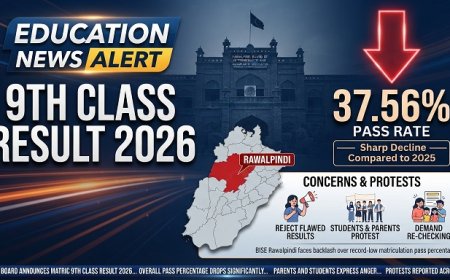
Rawalpindi board 9th class result 2026 shows 37.56% pass rate. Parents protest 63% failure, demand audit of marking and review of government school results.

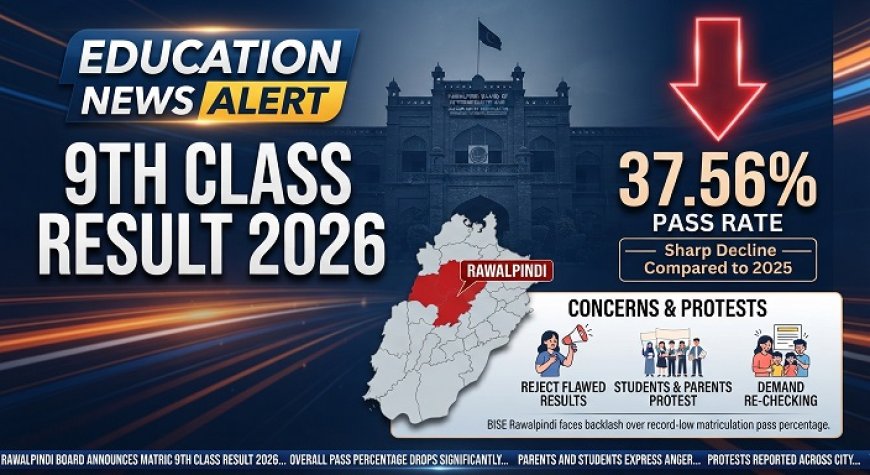
Short answer: The Rawalpindi board (RBISE) has announced its 9th class (SSC Part‑I) result for 2026 with an overall pass rate of only 37.56%; out of 121,739 students who appeared, just 45,724 passed while 76,015 failed, triggering parent protests and calls for an independent audit of marking standards and a review of government school performance.dawn
This matters because Rawalpindi’s pass rate is 7.61 percentage points below the Punjab average of 45.17%, placing it at the bottom among the nine provincial boards, and because private/affiliated schools dramatically outperformed government institutions within the same board.dawn
What you’ll get in this report:
-
The official result numbers and how Rawalpindi compares to other Punjab boardsdawn
-
The government vs private school performance gap inside RBISEdawn
-
What parents and school associations are demanding (audit, re‑checking, marking review)dawn
-
Context from Lahore and Gujranwala on similar concerns over government school resultsurdu.arynews+1
-
Practical next steps for students and parents (re‑checking, subject improvement, documentation)
What are the official Rawalpindi board 9th class result 2026 numbers?
One-sentence summary: RBISE’s own data shows 37.56% pass, 63% fail, and a large gap between registered, appeared and successful candidates in SSC Part‑I 2026.dawn
Key figures from the board’s announcement (as reported):
-
Registered candidates: 124,430dawn
-
Appeared candidates: 121,739dawn
-
Passed: 45,724 (37.56%)dawn
-
Failed: 76,015 (~63%)dawn
-
Absent: 2,354dawn
-
Annulled admission forms: 337dawn
These figures were shared by Prof. Dr. Iqbal Mahmood, Chairman of RBISE, and have become the basis of the current controversy.dawn
How does Rawalpindi’s 9th result compare with other Punjab boards?
Short version: Rawalpindi is the lowest-performing board in Punjab for 9th class 2026, trailing the provincial average by a wide margin.
-
Punjab average pass rate (9th class 2026): 45.17% across nine boardsdawn
-
Rawalpindi pass rate: 37.56% — 7.61 percentage points lower than the provincial averagedawn
-
This places RBISE at the bottom among the nine Punjab boards analyzed in media reports.dawn
All Punjab boards announced their 9th class results on 2 September 2026 at 10:00 AM, under a synchronized schedule, making cross-board comparison straightforward.propakistani+2
Why are parents and school associations protesting?
One-sentence summary: Stakeholders say a 63% failure rate is abnormally high and suspect issues in marking standards, evaluation consistency and/or systemic problems in government schools.dawn
Main demands and concerns:
-
Audit of results: The All Pakistan Private Schools Management Association (North Punjab, including Islamabad) has urged the board chairman to conduct an audit of the result and review marking standards.dawn
-
Marking fairness: Parents and private school leaders argue that such a low pass rate, especially compared to other boards, suggests possible harsh marking or inconsistencies in evaluation.dawn
-
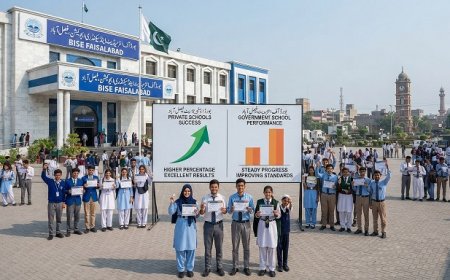
Government school crisis: Within Rawalpindi board, government institutions recorded a 30.82% success rate versus 60.41% for private affiliated institutions, raising questions about teaching quality, supervision and resources in public schools.dawn
The protest is not only about this year’s cohort; parents fear long-term reputational damage for students and loss of confidence in the board’s assessment system.
Government vs private schools: how big is the gap in Rawalpindi?
Short answer: The internal split is stark: private/affiliated schools in RBISE more than doubled the success rate of government schools in 9th class 2026.dawn
RBISE-wise breakdown:
This mirrors patterns seen elsewhere in Punjab:
-
In Gujranwala board, government schools had 39.59% pass versus 69% for non‑government schools.dawn
-
In Lahore, reports indicate around 61% of government school students failed 9th class, with boys’ schools particularly weak.urdu.arynews
-
In Gujranwala district, education authorities have started summoning heads of government schools with results below 25% and issuing notices to those below the board average.minutemirror.com
Taken together, these reports point to a systemic issue in government school learning outcomes and/or assessment preparedness, not just an isolated Rawalpindi problem.
What are students and parents advised to do next?
Goal: Protect students’ academic records and explore all available remedies under board rules.
Practical steps:
-
Download/collect the result card
-
Use the official RBISE result portal or SMS service to get the detailed mark sheet.propakistani+1
-
Verify name, roll number, subject-wise marks and grade.
-
-
Consider re‑checking / scrutiny (if offered)
-
If RBISE announces a re‑checking or scrutiny window, apply for subjects where marks seem unexpectedly low or borderline (e.g., just below 40%).
-
Follow the official procedure, fee and deadlines exactly as notified on biserawalpindi.edu.pk or the result portal.propakistani+1
-
-
Plan for improvement/supplementary exams
-
For subjects with a U grade (below 40%), prepare for supplementary/improvement exams as per board rules.propakistani
-
Focus on weak subjects identified in the result card; consider coaching or structured self-study plans.
-
-
Document everything
-
Keep copies of result cards, fee receipts, re‑checking applications and any correspondence with the board.
-
If joining collective parent actions (petitions, meetings with the board), maintain written records.
-
-
Engage with school leadership
-
Parents should meet with school principals and management to discuss subject-wise performance, teacher accountability and remedial plans for affected students.
-
Myth vs Fact: Rawalpindi Board 9th Result 2026
E‑E‑A‑T Reinforcement (Editorial Note)
This article is based on the official RBISE result data as reported by credible Pakistani news outlets on 4 September 2026, including direct quotes from the board chairman and education association leaders. Comparative figures for Punjab boards and government vs private performance are drawn from the same primary reporting, with additional context from Lahore and Gujranwala coverage. Where we suggest actions (re‑checking, improvement exams), these follow standard Punjab board procedures; students must still follow the specific notices issued by RBISE.dawn+2
Last checked: 4 September 2026 (same day as parent protest coverage and result analysis).dawn
FAQs (AEO/GEO/PAA‑style)
1. What is the pass percentage of Rawalpindi board 9th class result 2026?
The overall pass rate is 37.56%, meaning 63% of students failed the SSC Part‑I exams under RBISE in 2026.dawn
2. How many students appeared and passed in Rawalpindi board 9th class 2026?
Out of 124,430 registered candidates, 121,739 appeared; 45,724 passed and 76,015 failed, with 2,354 absent and 337 forms annulled.dawn
3. Why are parents protesting the Rawalpindi board 9th result?
Parents and private school associations are protesting the 63% failure rate and demanding an audit of marking standards and a review of evaluation consistency, especially for government schools.dawn
4. How does Rawalpindi’s 9th result compare with other Punjab boards?
Rawalpindi’s 37.56% pass rate is 7.61 percentage points below the Punjab average of 45.17%, placing it at the bottom among the nine provincial boards.dawn
5. What is the difference between government and private school results in Rawalpindi board?
Within RBISE, government institutions had a 30.82% success rate, while private affiliated institutions achieved 60.41%, showing a large performance gap.dawn
6. What are the passing marks for 9th class in Punjab boards in 2026?
The revised passing threshold for SSC Part‑I in 2026 is 40% in each subject; below this, students receive a U grade and must reappear as per board rules.propakistani+1
7. Can students apply for re‑checking of Rawalpindi board 9th class result 2026?
If RBISE announces a re‑checking/scrutiny window, students can apply for specific subjects through the official portal within the notified deadline and fee structure.propakistani+1
8. Are similar issues reported in other Punjab cities?
Yes. Lahore reports show around 61% failure in government school 9th class, and Gujranwala authorities have taken action against low‑result government schools, indicating a broader concern.urdu.arynews+1
9. Who is the chairman of Rawalpindi board in 2026?
The RBISE chairman is Prof. Dr. Iqbal Mahmood, who announced the 9th class result and its statistics.dawn
10. What should students do if they fail one or more subjects in 9th class Rawalpindi 2026?
They should plan for supplementary/improvement exams in the failed subjects, seek academic support, and monitor RBISE notices for dates, forms and fee details.propakistani+1
Conclusion: What to do next
For students and parents in Rawalpindi, the immediate priorities are to secure the official result card, evaluate subject-wise performance, and decide on re‑checking (if offered) and improvement plans for failed subjects. At the same time, the documented gap between government and private school outcomes and Rawalpindi’s position at the bottom of Punjab’s boards should push parents, school leaders and policymakers to demand a transparent audit of marking and concrete reforms in government school teaching and assessment.
What's Your Reaction?
 Like
0
Like
0
 Dislike
0
Dislike
0
 Love
0
Love
0
 Funny
0
Funny
0
 Angry
0
Angry
0
 Sad
0
Sad
0
 Wow
0
Wow
0