











HEC Dual & Joint Degree Policy 2026: Global Education Pathways Explained
HEC’s 2026 policy allows dual, double, and joint degree programs with foreign universities. Learn how you can earn international qualifications in Pakistan.

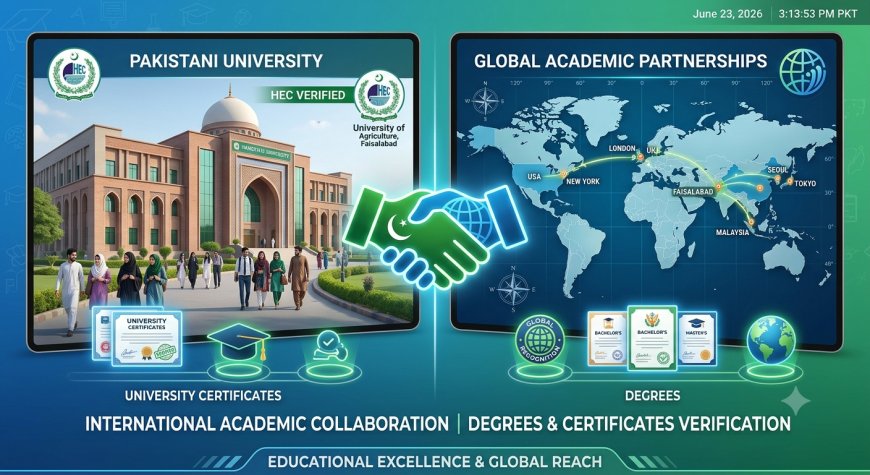
As of May 2026, the Higher Education Commission (HEC) has launched a landmark policy to modernize how Pakistani universities collaborate with foreign institutions. This policy is designed to reduce the cost of international education while maintaining global quality standards.
The framework introduces three distinct collaborative arrangements:
-
Dual Degree: You earn two separate degrees in distinct or closely related fields from both your local Pakistani university and the foreign partner institution.
-
Double Degree: You earn two separate degrees in the same discipline from partnering institutions.
-
Joint Degree: Two or more universities jointly award a single degree, which will feature the signatures of all participating institutions.
Why This Matters for Students
For many, the dream of an international degree was previously limited by high costs and the need to relocate. The 2026 policy changes this by allowing:
-
Global Recognition: Degrees awarded under these programs are recognized both in Pakistan and by the foreign partner’s country.
-
Cost Efficiency: You can access high-quality international curricula and foreign faculty without the prohibitive expense of full-time residence abroad.
-
Credit Mobility: The policy mandates clear "credit mapping," ensuring that work done in Pakistan is officially recognized by your foreign partner university.
-
Employability: Holding a joint or dual degree from a top-tier ranked institution significantly boosts your profile for both local and global job markets.
Myth vs. Fact
Myth: Any university in Pakistan can now offer these programs to any foreign partner.
Fact: No. HEC strictly requires that foreign partners be internationally recognized, usually appearing in major global rankings (like the top 1,000) or UNESCO databases. Furthermore, the Pakistani university must secure an HEC-issued NOC before launching any program.
E-E-A-T Reinforcement
This summary is based on the official HEC notification (May 2026). We emphasize that students should verify if their specific university program has received an HEC No-Objection Certificate (NOC) before enrolling in any "dual" or "joint" degree offering to ensure the qualification is officially recognized.
FAQ Section
1. Can I study two degrees at the same time?
Yes, the 2026 policy formally allows students to pursue two degree programs simultaneously, provided there are no time clashes and all admission requirements are met.
2. Are all foreign universities eligible?
No, HEC only approves partnerships with institutions that demonstrate credible international standing and academic repute.
3. Does this policy cover online-only degrees?
The policy focuses on structured academic collaboration; always check the specific program’s blend of in-person and digital instruction with the university registrar.
4. Will my degree have the foreign university's name on it?
Yes, depending on the arrangement (Dual, Double, or Joint), your degree will be awarded by the partnering institutions, with the collaborative nature specified.
5. Where can I find a list of approved programs?
Check the official
6. Do I need to be a top-tier student to apply?
While admission remains merit-based, the policy aims to expand access; however, you must meet the academic prerequisites of both the Pakistani and foreign partner universities.
Conclusion
The 2026 HEC policy is a major step toward integrating Pakistan’s higher education with the global academic community. If you are aiming for an international career, keep an eye on your university's partnership announcements and ensure any program you join is officially registered under this new framework.
What's Your Reaction?
 Like
0
Like
0
 Dislike
0
Dislike
0
 Love
0
Love
0
 Funny
0
Funny
0
 Angry
0
Angry
0
 Sad
0
Sad
0
 Wow
0
Wow
0