






HEC Dual/Joint Degree Policy 2026 Explained: Scholarships and International Study Pathways for Students
HEC dual degree policy 2026 update for Pakistani students with overseas scholarships and study abroad opportunities explained.
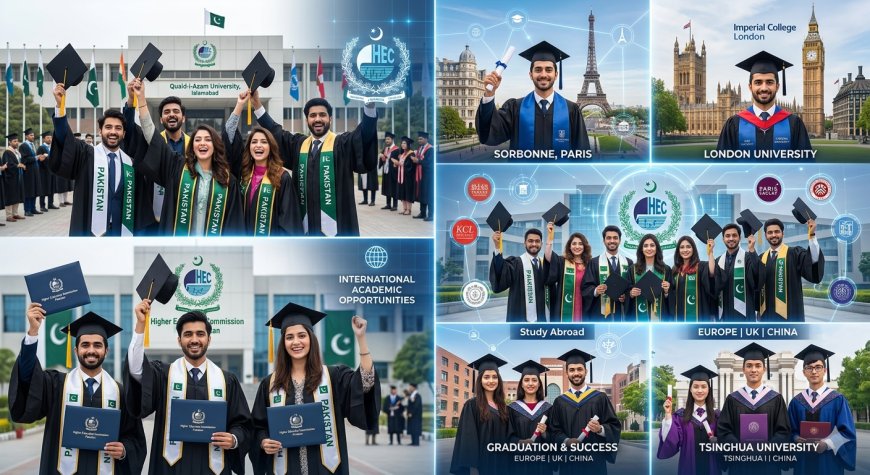
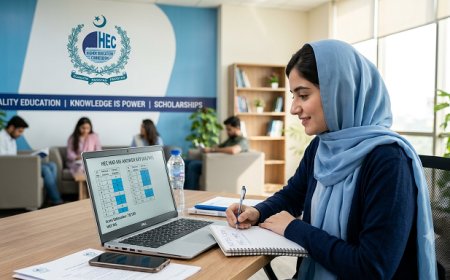
HEC’s updated dual and joint degree policy is expanding academic pathways for Pakistani students in 2026. The policy focuses on increasing collaboration between local universities and international institutions, allowing students to earn degrees recognized both in Pakistan and abroad.
At the same time, HEC is actively promoting overseas scholarship opportunities through global partners such as Europe, the UK, China, and North America. This combination of dual degrees and scholarships gives students more structured routes for international education without fully self-funded study abroad.
What is the HEC Dual Degree Policy 2026?
The Higher Education Commission (HEC) allows Pakistani universities to partner with foreign institutions so students can complete part of their degree in Pakistan and part abroad.
Under this system:
- Students study at two universities
- One degree is jointly awarded
- Curriculum is shared between institutions
- Degrees are recognized internationally (subject to approval)
This policy is designed to improve academic quality and global exposure for Pakistani graduates.
Key Features of HEC Joint Degree Programs
- Collaboration between Pakistani and foreign universities
- Credit transfer system (ECTS or equivalent)
- Exchange semesters abroad
- Joint supervision of final research projects
- Shared academic standards and evaluation
How Overseas Opportunities Are Linked with HEC Policy
HEC is not only focusing on degree structures but also connecting students with international funding programs.
Common pathways include:
- Government-funded scholarships (HEC-managed)
- Partner university exchange programs
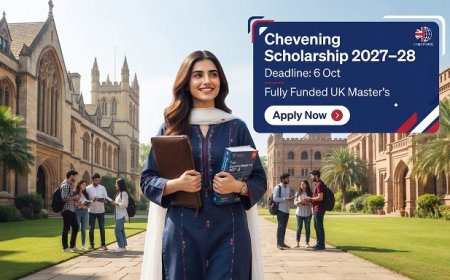
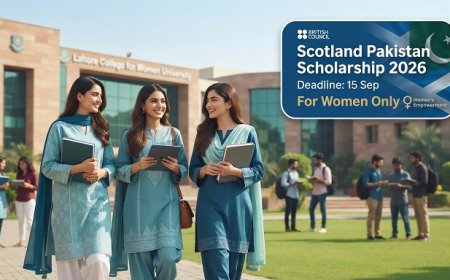
- International donor scholarships (Chevening, Fulbright, etc.)
These opportunities often overlap with dual-degree frameworks, especially in STEM, social sciences, and public policy fields.
Top 5 International Scholarships Pakistani Students Should Track (2026)
| Scholarship | Region | Level | Status |
|---|---|---|---|
| Chevening Scholarships | UK | Master’s | Annual intake expected |
| Fulbright Program | USA | Master’s/PhD | Open annually |
| Erasmus Mundus | Europe | Master’s | Multi-country programs |
| DAAD Scholarships | Germany | Graduate/PhD | Rolling programs |
| Commonwealth Scholarships | UK/Commonwealth | Master’s/PhD | Annual cycle |
Note: Deadlines vary each year. Students must verify from official portals.
Who Can Benefit From HEC Dual Degree Policy?
- Undergraduate students in Pakistani public/private universities
- Students in STEM, business, and social sciences
- High-achieving students with strong academic records
- Students planning study abroad but seeking cost reduction
How Students Can Apply
General steps:
- Check your university’s HEC-approved partner programs
- Apply through your university’s international office
- Prepare transcripts and academic documents
- Meet language requirements (IELTS/TOEFL if required)
- Apply for exchange or dual-degree intake cycles
Why This Policy Matters for Pakistani Students
This policy reduces the gap between local and international education. Students can:
- Gain global exposure at lower cost
- Improve employability in international markets
- Access research opportunities abroad
- Build academic networks across countries
Myth vs Fact
Myth: Dual degrees automatically guarantee foreign jobs.
Fact: Degrees improve opportunities but job placement depends on skills and experience.
Myth: HEC funds all overseas study.
Fact: Only selected scholarships are fully funded; many are competitive.
E-E-A-T Reinforcement
This article is based on publicly available HEC policy direction and widely reported education coverage in Pakistani media outlets such as Dawn and The Nation. Interpretations are aligned with standard HEC academic frameworks and historical scholarship structures.
Students should always verify program-specific details directly from Higher Education Commission (HEC) and partner university portals before applying.
FAQ Section
1. What is HEC dual degree policy 2026?
It is a system where Pakistani universities partner with foreign institutions to offer jointly recognized degrees.
2. Is HEC offering overseas scholarships in 2026?
Yes, HEC continues to coordinate international scholarships through partner programs, but availability depends on specific cycles.
3. Who can apply for joint degree programs?
Primarily undergraduate and graduate students enrolled in HEC-recognized universities.
4. Do dual degrees require studying abroad?
Yes, usually one or more semesters are completed at a partner foreign university.
5. Are these programs fully funded?
Some are funded through scholarships, but many require partial self-financing.
6. What is the benefit of a dual degree?
Students receive international exposure and a degree recognized in more than one country.
7. Which countries are involved in HEC partnerships?
Common partners include the UK, China, Germany, Turkey, and European Union universities.
8. Is IELTS required for these programs?
In most cases, yes, especially for English-speaking countries.
Conclusion
HEC’s dual degree policy and overseas scholarship pathways are expanding academic choices for Pakistani students in 2026. The focus is on shared degrees, international exposure, and structured access to global education systems.
Students should actively track HEC announcements and university partnership programs to apply at the right time and avoid missing limited intake cycles.
What's Your Reaction?
Like
0
Dislike
0
Love
0
Funny
0
Angry
0
Sad
0
Wow
0