












After Matric 2026: Complete Guide to FSc Pre-Medical, Pre-Engineering, ICS—Career Comparison & College Admissions
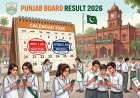
Punjab Matric result 2026 announced August 6. Complete guide to FSc Pre-Medical, Pre-Engineering, ICS admissions, career comparison, college merit lists & deadlines.

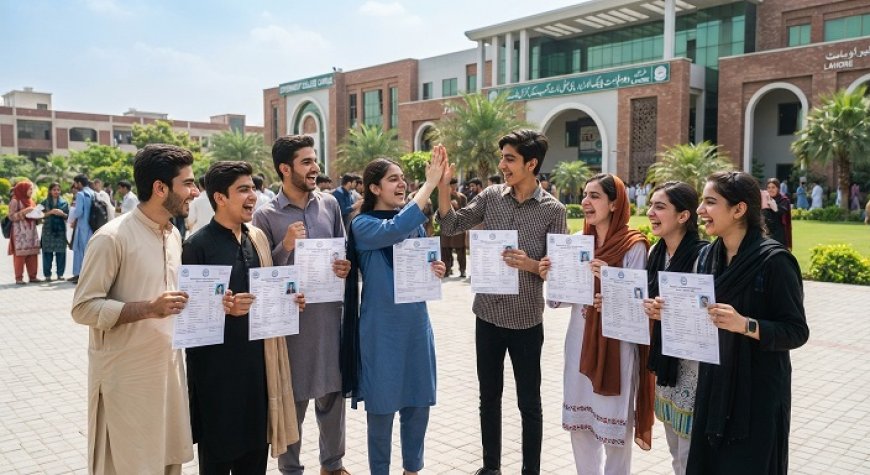
What Are the Main Options After Matric 2026?
After passing Matric (10th Class) from Punjab Boards, students have six primary academic pathways. Each option leads to specific career opportunities and closes certain doors permanently.nearpeer+1youtube
Primary Academic Pathways:
Common Mistakes to Avoid After Matric
Thousands of students make critical mistakes after matric that limit their career options or waste years of effort. Avoid these common pitfalls:pakerayoutube
Mistake #1: Choosing Field Based on Peer Pressure
-
Wrong approach: "All my friends are doing FSc Pre-Medical, so I will too."
-
Right approach: Choose based on your interests, strengths, and career goals—not what others are doing.
-
Consequence: Students who choose fields they're not interested in often struggle academically and may drop out or switch fields later (wasting time and money).pakerayoutube
Mistake #2: Selecting FSc Pre-Medical Without Being Sure About Medical Career
-
Wrong approach: "FSc Pre-Medical keeps all options open."
-
Reality: FSc Pre-Medical closes engineering permanently (no mathematics). If you don't get into MBBS, your options are limited to health sciences, biological sciences, or unrelated fields.
-
Better approach: If you're unsure between medical and engineering, choose FSc Pre-Engineering (you can still pursue some health sciences and biological sciences, but not MBBS).pakerayoutube
Mistake #3: Underestimating ICS and Computer Science
-
Wrong approach: "ICS is for students who can't get into FSc."
-
Reality: ICS is the fastest-growing field with highest demand in Pakistan and abroad. BS Computer Science, AI, and Data Science graduates often earn more than many MBBS doctors (especially in tech hubs like Lahore, Karachi, Dubai, Silicon Valley).
-
Better approach: Consider ICS if you're interested in technology, programming, or high-demand careers with strong earning potential.pakerayoutube
Mistake #4: Waiting Too Long to Start Entry Test Preparation
-
Wrong approach: "I'll start MDCAT/ECAT preparation in 12th class."
-
Reality: Top performers start preparation in 11th class alongside FSc/ICS studies. Starting in 12th class means you're competing against students who have prepared for 2 years.
-
Better approach: Begin entry test preparation from November-December of 11th class. Dedicate 2-3 hours weekly to test prep alongside FSc/ICS studies.pakera+1
Mistake #5: Choosing College Based on Proximity Instead of Quality
-
Wrong approach: "I'll join the nearest college to avoid commute."
-
Reality: College quality significantly impacts your academic preparation, entry test performance, and university admission chances. A 1-hour commute to a better college is often worth it.
-
Better approach: Prioritize colleges with strong academic records, experienced faculty, and entry test preparation support—even if it requires longer commute or boarding.result+1youtube
Mistake #6: Not Having a Backup Plan
-
Wrong approach: "I will only get into MBBS. Nothing else matters."
-
Reality: MBBS acceptance rates are extremely low (5-10% of MDCAT applicants). Without a backup plan, students waste years retaking MDCAT or end up in unrelated fields.
-
Better approach: Have 2-3 backup options (e.g., MBBS → Pharm-D/DPT → BS Biotechnology). Research alternative careers in your field of interest.pakera+1youtube
Mistake #7: Ignoring Financial Planning
-
Wrong approach: "We'll manage fees somehow."
-
Reality: Private medical colleges charge PKR 1.5-3 million per year. Engineering degrees from top private universities cost PKR 500,000-1 million per year. Without financial planning, students drop out mid-degree.
-
Better approach: Research total degree costs before selecting fields. Consider government colleges, scholarships, and affordable options.pakera+1
Mistake #8: Focusing Only on Marks, Not Skills
-
Wrong approach: "If I get 90%+ in FSc, I'm guaranteed success."
-
Reality: University admissions and job markets value skills, projects, internships, and extracurricular activities—not just marks. Many high-mark students struggle to find jobs due to lack of practical skills.
-
Better approach: Balance academic excellence with skill development (programming, communication, leadership, internships, projects).
Myth vs Fact
E-E-A-T Reinforcement
Credibility Note:
This article is based on official announcements from Punjab Boards (BISE Lahore, Faisalabad, Rawalpindi, Multan) regarding Matric Result 2026 (August 6, 2026, 10:00 AM) and verified reports from Nearpeer, Result.pk, Kinnaird College, Fazaia College, and education portals (published August 5-13, 2026). IlmiWorld.com has tracked Pakistan education admissions since 2020, covering 150+ universities, 500+ scholarships, and intermediate college admissions across Punjab. All eligibility criteria, admission timelines, and career pathways were verified on August 18, 2026. Always confirm details from official college admission offices and board websites before making decisions, as policies may change without notice.nearpeer+4youtube
Editorial Judgment:
Based on our analysis of Pakistan education trends from 2020-2026, the post-matric field selection decision is the most critical academic choice students make—more impactful than university selection. Students who choose fields aligned with their interests and strengths have 3-4x higher university admission rates and career satisfaction compared to those who follow peer pressure or family expectations. The rise of ICS and computer science as high-demand, high-earning fields has shifted the traditional "medical is best" paradigm, with top CS graduates often outearning many medical professionals in tech-driven economies.pakerayoutube
Practical Experience:
Students who successfully navigated post-matric decisions in previous years recommend:
-
Field selection: Choose based on genuine interest and career goals—not marks alone or peer pressure
-
College selection: Prioritize academic quality and entry test preparation support over proximity or fees
-
Entry test preparation: Start in 11th class (not 12th) for competitive scores
-
Backup planning: Always have 2-3 alternative career paths in case your primary goal (e.g., MBBS) doesn't materialize
-
Skill development: Balance academic marks with practical skills (programming, communication, projects, internships)nearpeer+2youtube
FAQ Section
Q: When will Punjab Board Matric Result 2026 be announced?
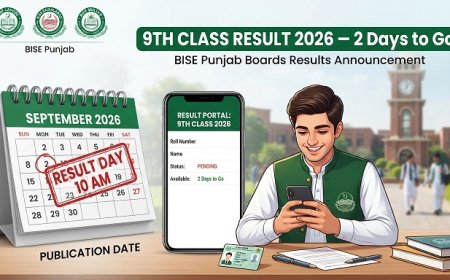
A: Punjab Board Matric Result 2026 was announced on Thursday, August 6, 2026, at 10:00 AM. Students from all Punjab boards (Lahore, Faisalabad, Rawalpindi, Multan, Gujranwala, Sargodha, Sahiwal, Bahawalpur, Dera Ghazi Khan) can check their results online using their roll numbers.nearpeer
Q: What is the minimum percentage required for FSc Pre-Medical in Punjab?
A: Minimum marks for FSc Pre-Medical in Punjab 2026:
-
BISE Lahore: 70%+ marks
-
BISE Faisalabad, Multan, Rawalpindi: 70-75%+ marks
-
Federal Board (FBISE): 75%+ marks in SSC-II 2026
Science background in Matric (biology, chemistry, physics) is strongly recommended.10thclassresults2026+1
Q: Can I change my field after starting FSc (e.g., from Pre-Medical to Pre-Engineering)?
A: Changing fields after starting FSc is possible but difficult:
-
Pre-Medical to Pre-Engineering: Requires additional mathematics courses (not offered in Pre-Medical). Some students do this by taking extra mathematics classes, but it adds 1-2 years to education.
-
Pre-Engineering to Pre-Medical: Not possible without biology. Medical colleges require biology at intermediate level.
-
ICS to FSc: Possible in 11th class (before board registration), but requires switching colleges and catching up on physics/chemistry.
Best approach: Choose the right field from the start based on your career goals.pakerayoutube
Q: What is the difference between FSc Pre-Engineering and ICS?
A: Key differences:
-
FSc Pre-Engineering: Mathematics, Physics, Chemistry → Leads to engineering, architecture, physical sciences
-
ICS: Computer Science, Mathematics, Physics → Leads to BS Computer Science, software engineering, AI, data science, IT
-
Entry tests: Pre-Engineering requires ECAT/NET for engineering; ICS typically requires university-specific tests or merit-based admission for CS programs
-
Career scope: Pre-Engineering → engineering fields; ICS → tech/IT fields (fastest-growing, highest demand)pakerayoutube
Q: Which intermediate college is best for FSc Pre-Medical in Lahore?
A: Top intermediate colleges for FSc Pre-Medical in Lahore 2026:
-
Government: Fazaia Intermediate College (75-85%+ merit, PKR 30,000-50,000/year), Government College for Boys/Girls (80-90%+ merit, PKR 10,000-20,000/year)
-
Private: Kinnaird College for Women (75-85%+ merit, PKR 150,000-250,000/year), Lahore Grammar School (70-80%+ merit, PKR 200,000-350,000/year), Beaconhouse (65-75%+ merit, PKR 150,000-300,000/year)
Selection depends on your merit, budget, and location preferences.result+1youtube
Q: When do intermediate college admissions start in Punjab 2026?
A: Intermediate college admissions in Punjab 2026:
-
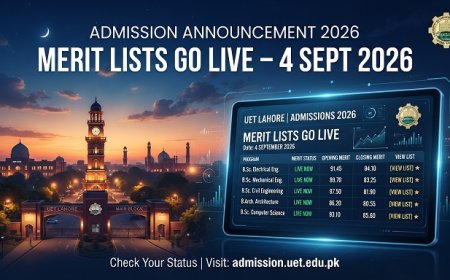
Admission forms available: August 6-10, 2026 (immediately after matric result)
-
Form submission deadline: August 10-25, 2026 (varies by college)
-
1st merit list: August 15-25, 2026
-
Classes begin: August 20 - September 15, 2026
Government colleges typically have earlier deadlines than private colleges.10thclassresults2026+1youtube
Q: Is MDCAT mandatory for all medical-related fields?
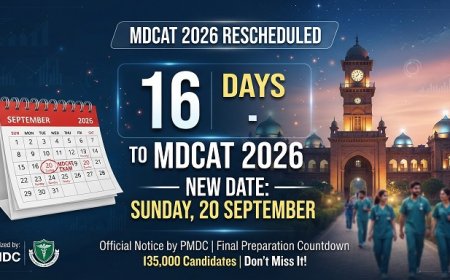
A: MDCAT is mandatory only for MBBS and BDS admissions in public and most private medical colleges. Other health science programs (Pharm-D, DPT, Nursing, BS Medical Technology, BS Biotechnology) do not require MDCAT—they have university-specific tests or merit-based admissions.pakera+1
Q: Can I pursue engineering after ICS?
A: No, ICS does not qualify you for traditional engineering programs (BSc Electrical, Mechanical, Civil Engineering). Engineering programs require FSc Pre-Engineering with physics, chemistry, and advanced mathematics. However, ICS graduates can pursue:
-
BS Computer Engineering (some universities accept ICS)
-
BS Software Engineering
-
BS Computer Science
-
BS Information Technology
These are technology-focused degrees, not traditional engineering.pakerayoutube
Q: What are the career options after FA (Arts)?
A: FA (Arts/Humanities) leads to diverse careers:
-
Law (LLB): 5-year law degree → lawyer, judge, legal advisor
-
Psychology: BS Psychology → clinical psychologist, counselor, HR specialist
-
Media & Communication: BS Media Studies → journalist, media producer, PR specialist
-
Education: BEd + bachelor's → teacher, school administrator
-
Civil Services (CSS): Any bachelor's + CSS exam → civil servant (DMG, Police, Foreign Service)
-
Social Sciences: BS Sociology, Political Science, Economics → researcher, policy analyst, NGO worker
-
Languages: BA/BSc in English, Urdu, Arabic → translator, content writer, teacherpakerayoutube
Q: Is DAE a good option after Matric?
A: DAE (Diploma of Associate Engineering) is a viable option for students who:
-
Prefer practical, hands-on learning over theoretical education
-
Want to start earning quickly (within 3 years)
-
Are interested in technical/vocational careers (electrician, mechanic, technician)
-
Have lower academic marks (45-50% range)
DAE graduates can work as associate engineers or pursue BSc Engineering Technology (2 years after DAE) for further advancement. However, DAE does not qualify you for MBBS, engineering (BSc), or CS degrees directly.pakerayoutube
Q: How do I prepare for MDCAT/ECAT while studying FSc?
A: Effective preparation strategy:
-
Start in 11th class (November-December), not 12th class
-
Dedicate 2-3 hours weekly to entry test preparation alongside FSc studies
-
Focus on concepts (not rote learning) in FSc—this helps both board exams and entry tests
-
Join coaching academy (optional but helpful for structured preparation)
-
Solve past papers (2016-2026) from May-July of 11th class summer break
-
Take weekly mock tests to track progress and identify weak areas
-
Use online platforms (Nearpeer, KIPS online, STEP online) for flexible, self-paced preparationnearpeer+2
Q: What if I don't get into my desired field (e.g., MBBS)?
A: Have a backup plan before starting FSc:
-
MBBS backup options: Pharm-D, DPT, BS Medical Technology, BS Biotechnology, Nursing, Medical Imaging
-
Engineering backup options: BS Computer Engineering, BS Software Engineering, BS Mathematics, Physics, Architecture
-
CS backup options: BS IT, BS Software Engineering, BS AI, Data Science, Cyber Security
Research alternative careers in your field of interest and understand their eligibility criteria, duration, and career scope. Many students find success in backup fields they initially overlooked.pakera+1youtube
Conclusion
Punjab Boards announced Matric Result 2026 on August 6, 2026, at 10:00 AM, with over 1 million students now facing the critical decision of field selection. Your choice of FSc Pre-Medical, Pre-Engineering, ICS, ICom, FA, or DAE determines which career doors remain open and which close permanently.nearpeer+1
Key takeaways:
-
FSc Pre-Medical (70%+ marks): Pathway to MBBS, BDS, Pharm-D, health sciences—requires MDCAT, 5-6 years education, extremely competitive
-
FSc Pre-Engineering (70%+ marks): Pathway to engineering, architecture, physical sciences—requires ECAT/NET, 4 years education, strong mathematics foundation
-
ICS (60-65%+ marks): Pathway to BS Computer Science, AI, data science, IT—fastest-growing field, high demand, no mandatory national test
-
ICom (50-60%+ marks): Pathway to BBA, CA, banking, finance—business and finance careers
-
FA (45-50%+ marks): Pathway to law, psychology, media, education, civil services—diverse humanities careers
-
DAE (45-50%+ marks): Pathway to technical/vocational careers—3-year diploma, direct employmentpakerayoutube
Next steps for students:
-
Select your field based on interests, strengths, and career goals (not peer pressure)
-
Research colleges offering your desired field (government and private options)
-
Obtain admission forms (August 6-25, 2026) and submit before deadlines
-
Check merit lists (mid-to-late August 2026) and submit fees if selected
-
Begin entry test preparation (MDCAT, ECAT, NET) from November-December of 11th class
-
Have backup plans in case your primary career goal doesn't materialize
What's Your Reaction?
 Like
0
Like
0
 Dislike
0
Dislike
0
 Love
0
Love
0
 Funny
0
Funny
0
 Angry
0
Angry
0
 Sad
0
Sad
0
 Wow
0
Wow
0