














Higher Education in Punjab May Shift to PPP Model – Key Changes Explained
Punjab may introduce PPP model in higher education. Learn what it means for universities, students, and future education reforms.

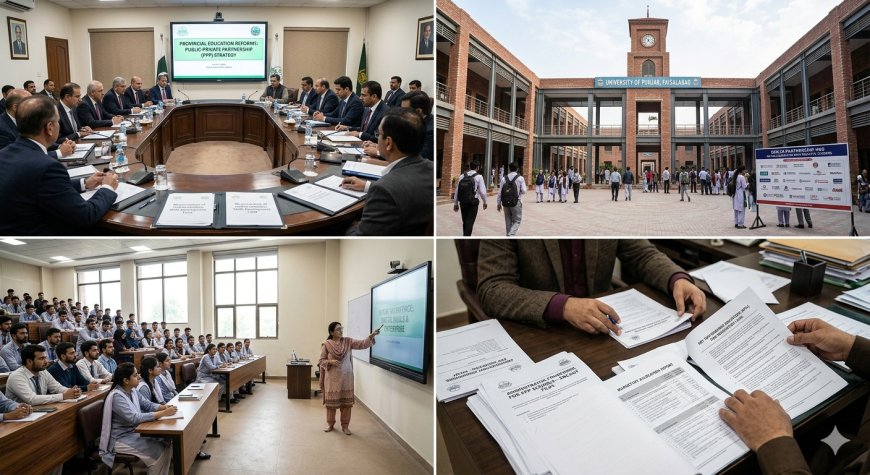
Punjab is preparing to introduce a Public-Private Partnership (PPP) model in higher education, signaling a potential shift in how universities and colleges may be managed and funded in the province.
The proposed direction focuses on involving private sector participation in selected areas of higher education governance, infrastructure, or service delivery. While full details and implementation structure are still expected through official notifications, the move reflects growing interest in alternative funding and management models for public universities.
For students, faculty, and university administrators, this development could influence admissions systems, campus services, funding structures, and institutional management in the coming years.
What Is the PPP Model in Higher Education?
The Public-Private Partnership (PPP) model is a system where government institutions collaborate with private sector organizations to manage or improve public services.
In higher education, PPP can involve:
- Shared management of universities or departments
- Private investment in infrastructure
- Outsourced campus services
- Joint academic programs
- Research collaboration with industry
This model is already used in different sectors like transport and infrastructure in Pakistan, and is now being considered for education reform in Punjab.
What Has Punjab Announced?
Based on available policy direction reports, Punjab is exploring or planning:
- Introduction of PPP frameworks in higher education institutions
- Greater private sector participation in selected university operations
- Administrative and financial restructuring in public universities
- Possible pilot projects before full-scale implementation
Important Note: Detailed policy documents, timelines, and implementation rules have not been fully disclosed at the time of writing. Final structure will depend on official approval and notification from relevant departments.
Why Is Punjab Considering PPP in Higher Education?
The move toward PPP models is generally linked to structural challenges in public education systems.
Common policy objectives include:
1. Financial Sustainability
Public universities often face funding gaps. PPP models may help reduce pressure on government budgets.
2. Infrastructure Improvement
Private investment can support:
- New classrooms
- Research labs
- Digital learning systems
- Campus facilities
3. Administrative Efficiency
Private-sector involvement may introduce new management practices and operational systems.
4. Industry-Academia Link
PPP models can strengthen collaboration between universities and industry, especially in technical fields.
How Could This Affect Students?
If implemented, students in Punjab’s higher education system may see changes such as:
Possible Positive Impacts
- Improved campus facilities
- Better access to modern technology
- Industry-linked degree programs
- More internship opportunities
Possible Concerns
- Changes in fee structures (depends on policy design)
- Shifts in university governance
- Differences in admission or academic policies
At this stage, these are potential outcomes and not confirmed policy decisions.
What Could Change for Universities?
Public universities in Punjab may experience:
| Area | Possible Change |
|---|---|
| Funding | Mixed public-private investment |
| Governance | Shared management structure |
| Infrastructure | Private sector participation |
| Academic Programs | Industry-linked curriculum development |
| Services | Outsourced operational systems |
The actual structure will depend on how the PPP framework is finalized.
Which Institutions Could Be Affected?
No official list has been released. However, PPP models are generally applied to:
- Public sector universities in Punjab
- Selected colleges under provincial control
- Technical and professional education institutions
Final selection criteria will depend on government policy design.
Challenges in PPP-Based Education Systems
While PPP models offer potential benefits, they also raise important considerations:
- Maintaining academic independence
- Ensuring affordability for students
- Protecting merit-based admissions
- Balancing profit and public service
- Regulatory oversight and accountability
Education experts often emphasize the need for strong governance frameworks before implementation.
What Students and Parents Should Expect Next
At this stage, the policy is in a development or planning phase.
Students should:
- Follow official updates from the Punjab Higher Education Department
- Avoid relying on unverified social media claims
- Monitor university-level announcements for pilot programs
- Stay updated on fee and admission policy changes (if any are announced)
Suggested Internal Links for IlmiWorld
- Higher Education Updates in Punjab
- University Admission Guide Pakistan
- Public vs Private Universities in Pakistan
- HEC Policy Updates 2026
- Best Universities in Lahore
- Education System in Pakistan Explained
Myth vs Fact
| Myth | Fact |
| PPP means full privatization of universities. | PPP usually means shared management, not complete privatization. |
| All public universities will shift immediately. | Implementation is typically gradual and phased. |
| PPP always increases student fees. | Fee impact depends on final policy structure. |
| Government loses control under PPP. | Governments usually retain regulatory authority. |
E-E-A-T Reinforcement
This article is based on general policy direction trends in public-private partnership models used in education and infrastructure sectors in Pakistan. At the time of writing, detailed official implementation frameworks for Punjab higher education PPP reforms have not been fully published.
Editorial Note: Readers should verify final policy structure through official notifications issued by the Government of Punjab and Higher Education Department before drawing conclusions.
FAQ Section
What is the PPP model in higher education?
It is a system where public universities or education services are managed or supported jointly by government and private sector partners.
Has Punjab officially implemented the PPP model in universities?
As of now, detailed implementation has not been officially confirmed in public notification form.
Why is Punjab considering PPP in education?
To improve funding, infrastructure, and efficiency in the higher education system.
Will student fees increase under PPP?
There is no confirmed policy yet; fee structure will depend on final regulations.
Which universities will be included?
No official list has been announced so far.
Is PPP the same as privatization?
No, PPP involves partnership, not full transfer of ownership.
How will students benefit from PPP?
Potential improvements may include better facilities, technology, and industry-linked education.
Will admission policies change?
No confirmed changes have been announced yet.
Where can students check official updates?
Updates should be followed through the Punjab Higher Education Department and official government notifications.
Is this model used in other countries?
Yes, PPP models are used in various education systems globally in different forms.
Conclusion
The proposed Punjab higher education PPP model represents a potential shift in how universities may be funded and managed in the province. While it is still in the planning or early discussion phase, the idea reflects broader efforts to improve infrastructure, efficiency, and collaboration in the education sector.
Students, parents, and university staff should wait for official policy details before making assumptions, while staying alert to future announcements that could reshape higher education in Punjab.
What's Your Reaction?
 Like
0
Like
0
 Dislike
0
Dislike
0
 Love
0
Love
0
 Funny
0
Funny
0
 Angry
0
Angry
0
 Sad
0
Sad
0
 Wow
0
Wow
0