























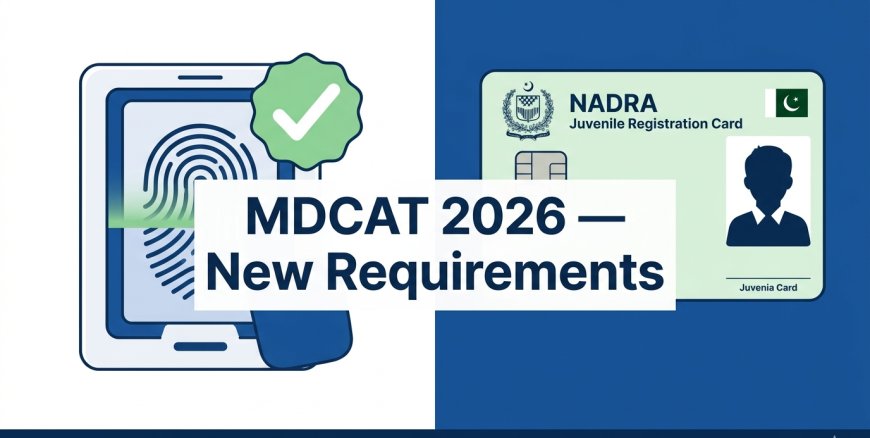
MDCAT 2026 Has Two New Rules — Biometric Verification and JRC Card. Here's What Every Candidate Must Know Now
MDCAT 2026 has two new requirements: biometric verification for all candidates and a JRC card for students under 18. Here is exactly what they mean and what you need to do.

You have been preparing for MDCAT 2026 for months. You know your Biology, your Chemistry, your MCQ strategy. What you might not know is that PMDC has added two new procedural requirements this year that have nothing to do with the syllabus but can still bar you from entering the exam hall.
MDCAT 2026 at a Glance — The New Rules
|
Detail |
Status / Information |
|
Exam Date |
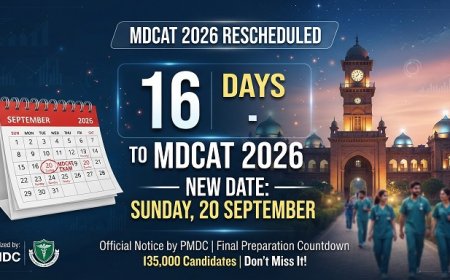
Sunday, August 16, 2026 |
|
Conducted by |
PMDC (Pakistan Medical and Dental Council) |
|
Biometric Verification |
Mandatory for ALL candidates at test centre entrance |
|
JRC Requirement |
Mandatory for candidates UNDER 18 years old |
|
CNIC Requirement |
Mandatory for candidates 18 and above |
|
Minimum FSc Marks |
65% in HSSC Pre-Medical (raised from 60%) |
|
Test Format |
180 MCQs, 3 hours, no negative marking |
|
Exam Cities |
20+ cities across all provinces + UAE and Saudi Arabia |
|
Registration (Expected) |
July 1–20, 2026 (official PMDC announcement pending) |
|
ℹ These changes were confirmed by PMDC through an official public notice in April 2026. PMDC Registrar Dr. Rehan Naqvi also addressed parent concerns in follow-up media statements. [Source: ProPakistani, Pakistan Today, April 2026] |
What Is Biometric Verification and Why PMDC Made It Mandatory?
Biometric verification at the MDCAT is not a new concept globally, but PMDC has now made it a formal non-negotiable requirement for 2026. Here is what it means in practice.
The answer is in the history. MDCAT 2023 and 2024 were both hit by serious impersonation scandals. In Khyber Pakhtunkhwa alone, 134 suspected cheaters were caught using hidden Bluetooth devices, and FIRs were filed in multiple impersonation cases. In Sindh, paper leaks affected the integrity of the exam so severely that court cases followed.
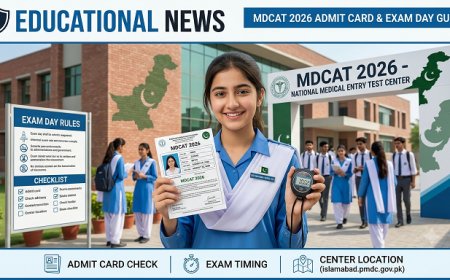
• You present your printed admit card (roll number slip) at the entrance.
• A PMDC official verifies your photo and name on the card.
• You place your finger on the biometric scanner — this takes under 30 seconds.
• After successful match, you are cleared to enter the hall.
• Electronic jammers and walk-through gates will be active at all centres.
• Mobile phones, smartwatches, Bluetooth devices, and calculators are strictly prohibited.
|
⚠ IMPORTANT: Photocopies of your CNIC or JRC are NOT accepted at the exam centre. You must bring the original, physically present identity document. A parent's CNIC will not substitute for your own. |
What Is the JRC (Juvenile Registration Card)?
Most students and parents have heard of the B-Form. The JRC is different, and the confusion between the two is exactly why PMDC's announcement worried families.
|
Feature |
B-Form (CRC) |
|
Format |
Paper certificate |
|
Has photograph |
No |
|
Biometric data |
No fingerprints |
|
Works with scanner |
No |
|
Valid for MDCAT 2026 |
No |
|
Issued by |
NADRA / Union Council |
|
Fee (Normal) |
— |
|
🚨 If you are under 18 and only have a B-Form (CRC), you cannot enter the MDCAT 2026 exam hall. You need the physical JRC card. Start this process now — do not wait until July. |
You need a JRC if you are under 18 years old on the day of the exam, August 16, 2026. That means anyone born after August 16, 2008 falls into this category.
How to Get Your NADRA JRC — Step by Step
The process is straightforward but requires an in-person visit. Unlike CNICs, the JRC cannot be completed entirely online because NADRA needs to capture live biometrics from the child. Here is what to do.
• Original B-Form (Child Registration Certificate / CRC) of the child
• Valid CNIC of at least one parent or blood relative
• The child must be physically present for live photo and fingerprint capture
• If the child has never been registered in NADRA: a computerised birth certificate from your Union Council, Municipal Committee, or Cantonment Board
• If parents are deceased or not available: a court-issued Guardianship Certificate
1. Locate your nearest NADRA Registration Centre (NRC) using the NADRA mobile app or the Pak-ID portal.
2. Arrive with the child and parent/guardian. Both must be physically present.
3. Collect a token at the counter and wait for your turn.
4. NADRA will capture the child's fingerprints and a live photograph.
5. Fill the application form at the counter (or download from the Pak-ID app if the child already has a CRC registered in the NADRA database).
6. Pay the application fee (see fee table below).
7. Collect your tracking ID and monitor card delivery status online.
JRC Fee and Delivery Timeline
|
Processing Category |
Fee (PKR) |
Delivery Time |
|
Normal |
Rs. 750 |
Up to 30 days |
|
Urgent |
Rs. 1,500 |
15 days |
|
Fast Track / Executive |
Rs. 2,500 |
7 days |
|
✅ Given that MDCAT registration opens around July 1, apply for your JRC by mid-June at the latest. If you choose the Normal category, 30 days means you need to apply by late May or early June to have the card in hand before registration. Fast Track is worth the extra cost here. |
Myth vs. Fact
|
MYTH |
FACT |
|
My B-Form is enough — it's issued by NADRA so it should count. |
The B-Form is a paper certificate with no fingerprint chip. Biometric scanners cannot read it. You need the physical JRC smart card. |
|
PMDC said the JRC rule was dropped in a previous year, so it probably won't apply this time either. |
PMDC Registrar Dr. Rehan Naqvi confirmed the rule was not enforced in a previous cycle but stated explicitly that it WILL be enforced for MDCAT 2026. Do not count on an exemption. |
|
I can use my parent's CNIC as proof of identity since they are 18+. |
Strictly prohibited. PMDC requires each candidate's own identity document — CNIC if 18+, JRC if under 18. A parent's CNIC will not be accepted. |
|
Only government candidates need biometric verification. |
Biometric verification is mandatory for ALL candidates appearing in MDCAT 2026 — government and private medical college applicants alike. |
|
I can apply for the JRC online from home without visiting NADRA. |
You can start the application via the Pak-ID app only if the child already has a CRC registered in NADRA's database. Physical biometric capture at a NADRA centre is still required. |
Why This Actually Matters — An Honest Assessment
|
At ilmiworld.com, we have tracked MDCAT policy shifts since 2019. We have seen the chaos that followed the 2023 paper leak scandal, and we have watched PMDC progressively tighten security each year in response. Biometric verification was tested during MDCAT 2025 and the data showed it reduced impersonation incidents significantly. The JRC requirement follows the same logic — linking every candidate to a NADRA-verified identity record before they can register, not just on exam day. The parents questioning this policy are not wrong to ask. For a family with four children, getting JRC cards made for multiple teenagers is time and money. But the alternative — showing up on August 16 without the right document after months of preparation — is a risk nobody should take. Start the process this week. |
The Third Change Nobody Is Talking About — Provincial Domicile Rule
While biometric verification and the JRC requirement are the most discussed new rules, PMDC also introduced a provincial alignment policy for MDCAT 2026 that will affect a significant number of students.
Under this policy, your matriculation certificate, intermediate certificate, and domicile must all be from the same province where you intend to appear in MDCAT. You cannot, for example, have a Punjab domicile and sit the MDCAT in Sindh. PMDC says this is to reduce interprovincial seat conflicts and ensure equitable distribution of seats for local candidates.
|
⚠ If you are studying in a different province from your home domicile, sort this out before registration opens. Check your domicile certificate province and match it to your intended test city. Changing this after registration is complex and not guaranteed. |
Complete MDCAT 2026 Document Checklist
|
Document |
Who Needs It? |
|
Printed Admit Card (Roll Number Slip) |
All candidates — released ~3 weeks before exam |
|
Original CNIC |
Candidates aged 18 and above on August 16, 2026 |
|
Original JRC (Juvenile Registration Card) |
Candidates under 18 on August 16, 2026 |
|
No Photocopy |
Neither CNIC nor JRC photocopies accepted |
|
Province-matching Domicile |
All candidates — must match matric/FSc province |
|
IBCC Equivalence Certificate |
O/A-Level students and foreign qualification holders |
Frequently Asked Questions
What is the JRC card and why does PMDC require it for MDCAT 2026?
The JRC (Juvenile Registration Card) is a chip-based NADRA smart card issued to Pakistani citizens under 18. PMDC requires it for under-18 candidates because it contains fingerprint data compatible with biometric scanners at exam centres. A B-Form (CRC) does not have this and will not be accepted.
Is biometric verification mandatory for all MDCAT 2026 candidates or only some?
It is mandatory for all candidates without exception. Every student, regardless of age or province, will undergo fingerprint-based biometric verification at the entrance of their exam centre before being allowed into the hall. PMDC made this official through a public notice in April 2026.
I am 17 years old. Can I use my B-Form at the MDCAT instead of getting a JRC?
No. The B-Form is a paper certificate that cannot be scanned biometrically. For MDCAT 2026, candidates under 18 must present a valid JRC (Juvenile Card) issued by NADRA. Apply for your JRC at your nearest NADRA Registration Centre as soon as possible.
How long does it take to get a NADRA JRC card in Pakistan?
Normal processing takes up to 30 days at a fee of Rs. 750. Urgent processing takes 15 days (Rs. 1,500). Fast Track / Executive category takes 7 days (Rs. 2,500). Given the MDCAT timeline, choose Urgent or Fast Track if you are applying in June or July.
Can my parent come with their CNIC instead of me getting a JRC?
No. PMDC requires each candidate to present their own identity document at the exam centre. A parent's CNIC is not a substitute. Under-18 candidates must have their own JRC card present on exam day.
What is the MDCAT 2026 exam date announced by PMDC?
PMDC officially confirmed the MDCAT 2026 date on 19 May 2026. The exam will be held on Sunday, August 16, 2026, across all provinces of Pakistan and at international centres in the UAE and Saudi Arabia.
What documents do I need on MDCAT 2026 exam day?
You need your printed admit card (roll number slip) and your original identity document — CNIC if you are 18 or older, JRC if you are under 18. Photocopies are not accepted. Students with O/A-Level qualifications must also carry their IBCC equivalence certificate.
What is the provincial alignment rule for MDCAT 2026?
PMDC now requires that a candidate's matriculation certificate, intermediate certificate, and domicile certificate all belong to the same province in which they intend to appear in MDCAT. Students cannot sit the exam in a different province from their domicile.
Was the JRC requirement enforced in previous MDCAT exams?
PMDC Registrar Dr. Rehan Naqvi confirmed that a similar instruction was issued in a previous MDCAT cycle but was not enforced at the time, allowing under-18 candidates without JRCs to still sit the exam. He clarified that MDCAT 2026 will enforce the rule fully. Do not assume a last-minute exemption will be given again.
What happens if I arrive at the MDCAT 2026 centre without the correct ID?
You will not be allowed to enter the examination hall. PMDC has made this a hard gate requirement — no valid identity document, no entry. There is no provision for on-the-spot resolution. This is why preparing your documents before registration even opens is essential.
The Bottom Line
MDCAT 2026 tests more than just Biology and Chemistry. It also tests whether you have your administrative house in order before you even walk through the gate.
|
📌 Track MDCAT 2026 registration, admit card release, and result date on ilmiworld.com. Bookmark this page and check back for the official PMDC portal link when registration goes live. |
What's Your Reaction?
 Like
0
Like
0
 Dislike
0
Dislike
0
 Love
0
Love
0
 Funny
0
Funny
0
 Angry
0
Angry
0
 Sad
0
Sad
0
 Wow
0
Wow
0