
















PMDC 3% MDCAT Relaxation Policy 2026 Explained — Who Can Benefit for MBBS & BDS Admissions?
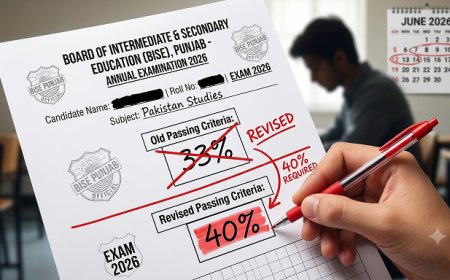
PMDC has approved a 3% MDCAT passing marks relaxation for MBBS and BDS admissions in Pakistan. Check eligibility, affected students, admission impact, merit changes, and latest PMDC updates for 2026.

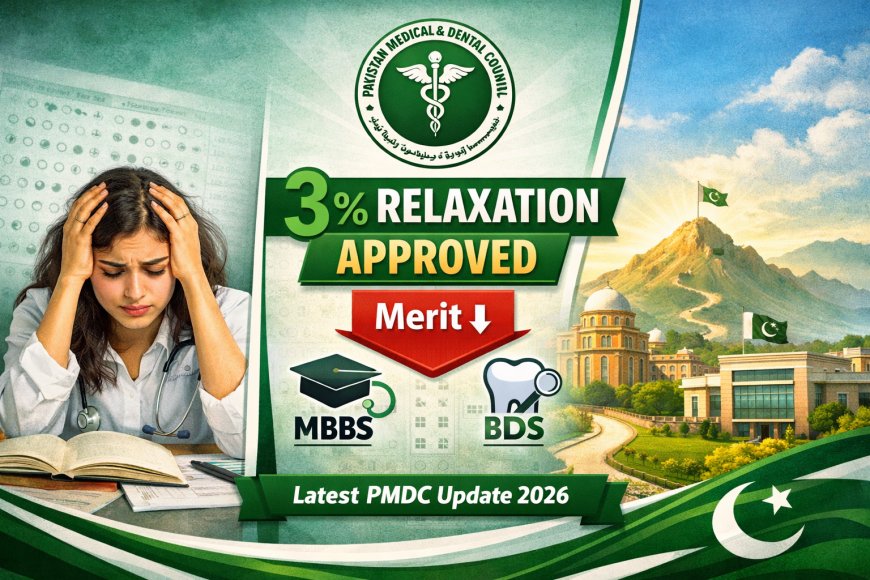
Medical admission season in Pakistan always brings tension, rumors, and confusion at the same time. The latest update from the Pakistan Medical and Dental Council (PMDC) has added another layer of discussion: a 3% MDCAT passing marks relaxation policy for MBBS and BDS admissions.
Many students are asking the same question right now: Does this mean getting into medical college has become easier? The short answer is not exactly. The real impact is more specific, and understanding it properly matters before you make any admission decisions.
In this article, we will explain the policy in simple terms, who can benefit, and how it may affect merit in 2026 admissions.
What Is the PMDC 3% MDCAT Relaxation Policy?
PMDC has approved a limited relaxation in MDCAT passing criteria (around 3%) for a specific admission cycle. This decision is linked to filling vacant seats in medical and dental colleges across Pakistan.
In simple terms:
- Students who were slightly below the usual passing threshold may still be considered
- The relaxation is not a blanket rule for all students
- It is mainly applied where seats remain unfilled after regular merit lists
This is not a permanent change in MDCAT standards. It is a conditional adjustment policy used in a specific admission situation.
Why Did PMDC Introduce This Relaxation?
There are a few practical reasons behind this decision:
1. Vacant MBBS and BDS Seats
Some private and even public sector colleges face difficulty filling all seats on strict merit thresholds.
2. Regional Admission Gaps
Certain regions consistently report lower student intake in medical programs.
3. Merit Fluctuation Issues
Small score differences sometimes leave thousands of seats unfilled or delayed in allocation.
4. Admission Cycle Management
The policy helps universities complete admission rounds within deadlines.
Who Can Benefit from the 3% MDCAT Relaxation?
This is the most important part for students.
The relaxation may benefit:
1. Students Just Below Passing Marks
If a student is slightly below the official MDCAT passing threshold, they may get considered in special admission rounds.
2. Candidates for Private Medical Colleges
Private institutions are more likely to use relaxed criteria when seats remain available.
3. Late Merit List Applicants
Students waiting in second, third, or final merit lists may benefit.
4. Certain Provincial or Institutional Cases
Some universities may apply relaxation based on internal admission policies aligned with PMDC guidelines.
Who Will NOT Benefit?
It is equally important to understand limitations:
1. High Merit Public Colleges
Top government medical colleges will still follow strict merit-based admissions.
2. Already Ineligible Candidates
Students far below passing marks will not suddenly become eligible.
3. Outside Admission Cycles
This is not an ongoing rule for future MDCAT attempts.
Does This Mean MBBS Admission Has Become Easy?
No.
This policy does not reduce competition in any meaningful way for top colleges.
Here is what actually changes:
- Slight increase in seat filling chances
- Minor flexibility in borderline cases
- No major impact on top merit lists
MBBS admission in Pakistan will still remain highly competitive in 2026.
Impact on MDCAT Merit in 2026
This policy may create small changes in admission trends:
Possible Effects
- Slight reduction in closing merit in some private colleges
- Faster completion of admission cycles
- Slight increase in student intake in borderline cases
No Major Impact On
- Top public sector college merit lists
- Overall MDCAT difficulty level
- High scorer selection process
So while the policy sounds big, its real-world effect is limited.
Student Reactions Across Pakistan
After the announcement, students have shown mixed reactions:
- Some feel it provides relief for borderline candidates
- Others worry it may increase confusion in merit lists
- Many students still prefer clear, strict criteria instead of flexible adjustments
This shows that medical admissions in Pakistan remain an emotionally sensitive topic.
What Should Students Do Now?
Instead of relying on policy changes, students should focus on preparation and strategy:
1. Don’t Depend on Relaxation Policies
These policies are not guaranteed every year.
2. Focus on Scoring Above Safe Merit Range
Aim for marks that secure admission without any relaxation benefit.
3. Track Official PMDC Updates Only
Avoid social media rumors during admission season.
4. Prepare for Both Government and Private Colleges
Options matter in competitive admission cycles.
Key Takeaway
The PMDC 3% MDCAT relaxation policy is:
- A limited admission adjustment tool
- Designed to fill vacant seats
- Helpful only for borderline candidates
- Not a replacement for merit-based selection
- Not a long-term policy change
For serious medical aspirants, the real priority remains strong MDCAT performance rather than policy exceptions.
Frequently Asked Questions (FAQs)
What is the PMDC 3% MDCAT relaxation policy?
It is a limited relaxation in passing criteria allowing borderline candidates to be considered for admission in specific cases.
Is this policy applicable to all students?
No, it mainly applies to specific admission situations where seats remain vacant.
Does it apply to MBBS and BDS both?
Yes, it can apply to both MBBS and BDS admissions depending on institution policy.
Is this a permanent change?
No, it is a temporary admission-related adjustment.
Will it reduce merit in Pakistan?
Only slightly in some private colleges, not in top public institutions.
Can low-scoring students get MBBS admission now?
Only borderline cases may benefit; low scores still remain ineligible.
Should students depend on this policy?
No, students should still aim for strong MDCAT scores.
What's Your Reaction?
 Like
0
Like
0
 Dislike
0
Dislike
0
 Love
0
Love
0
 Funny
0
Funny
0
 Angry
0
Angry
0
 Sad
0
Sad
0
 Wow
0
Wow
0