




















Coding Now Compulsory in Pakistan Schools: What It Means
Pakistan's Senate made coding compulsory in all schools from elementary to Grade 12 in 2026. Here's what the new education law means for students and your career.

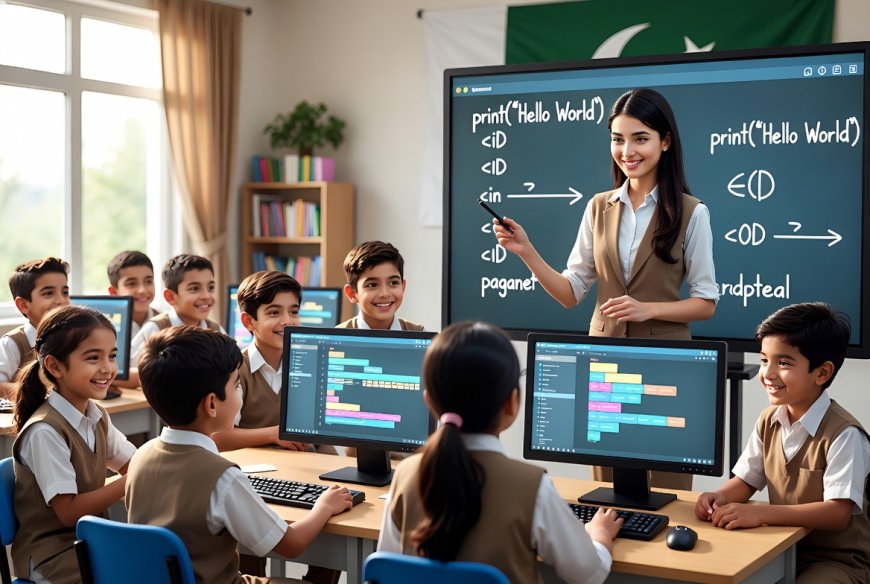
You've probably heard your parents say 'learn computers' your whole life. Now Pakistan's government is making it official — and mandatory. If you're in school anywhere in the country, from Grade 1 to Matric, your syllabus is about to change.
On May 16, 2026, Pakistan's Senate passed the Free and Compulsory Education Amendment Bill 2026. This law makes computer science and coding compulsory subjects from elementary school all the way through higher secondary. It amends the Right to Free and Compulsory Education Act 2012 and came into immediate effect after Senate approval.
In this article, we break down exactly what this law says, how it affects you as a student, what it means for your career — and what challenges lie ahead for schools across the country.
|
Quick Answer |
Pakistan's Senate passed the Free and Compulsory Education Amendment Bill 2026 on May 16, 2026, making coding and computer science compulsory from elementary to Grade 12 in all public and private schools. The law amends the Right to Free and Compulsory Education Act 2012 and came into immediate effect upon Senate approval. |
What Is the Free and Compulsory Education Amendment Bill 2026?
The Free and Compulsory Education Amendment Bill 2026 is a new law passed by Pakistan's Senate that modifies the Right to Free and Compulsory Education Act 2012. Before this amendment, computer science was optional or elective in most Pakistani schools.
Under the new law, computer science, coding, and programming are no longer optional. They are required core subjects from the elementary level through higher secondary school — Grade 1 through Grade 12 — in both public and private schools across Pakistan.
What Does This Law Actually Require?
Here's a clear breakdown of what the new law mandates:
|
Requirement |
Details |
|
Subject Status |
Compulsory — not an elective |
|
Grade Range |
Elementary through Higher Secondary (Grade 1-12) |
|
Applies To |
All schools — public and private, nationwide |
|
Subjects Covered |
Computer Science, Coding, Programming |
|
Effective Date |
Immediately after Senate approval — May 16, 2026 |
|
Legal Basis |
Amendment to Right to Free and Compulsory Education Act 2012 |
According to the official Senate session report, the bill was presented under the chairmanship of Senator Sherry Rehman and passed with full upper house approval. The amended law came into force immediately upon passage.
Why Did Pakistan Pass This Law?
Lawmakers pointed to a clear problem: Pakistan's unemployment rate crossed 7% for fiscal year 2024-25, with around 5.9 million people jobless. Senators made a direct argument — you can't keep producing graduates who lack basic digital skills and expect them to find jobs in a technology-driven economy.
The government's goals with this law are:
• Create a digitally literate generation from a young age
• Prepare students for freelancing, remote work, and global IT careers
• Reduce the digital divide between urban and rural education systems
• Help Pakistan's IT exports grow and compete globally
• Address youth unemployment by building practical, marketable skills
How Does This Affect Students Right Now?
If you're in school today, here's what this change means for you:
Elementary and Middle School Students
Coding and basic computer science will be introduced as full subjects in your weekly timetable. It won't just be an occasional computer lab session — it becomes part of your regular curriculum, like Math or English.
Matric and Intermediate Students
Computer science moves from an optional to a compulsory subject. If you were planning to skip it, that option is no longer available. This is actually good news — these skills will directly help you in entry tests, university, and your career.
Future University Students
Your coding foundation will be stronger by the time you reach undergraduate programs. This is especially valuable if you're aiming for engineering, computing, data science, or business programs at top universities like NUST, FAST, or LUMS.
Challenges Ahead — What Could Slow Implementation?
The law is passed, but rollout will take time. Here are the key challenges schools — especially in rural areas — will need to overcome:
|
Challenge |
Details |
Affected Areas |
|
Infrastructure Gaps |
Many schools lack computers, projectors, or reliable internet |
Mostly rural and semi-urban |
|
Teacher Training |
Few public school teachers are qualified to teach coding |
All provinces, especially KPK and Balochistan |
|
Urban-Rural Divide |
City schools are better positioned to implement quickly |
Rural districts across all provinces |
|
Curriculum Design |
Grade-by-grade implementation details still pending from Education Ministry |
All schools nationwide |
|
Budget Requirements |
Government needs major investment in digital infrastructure |
Primarily public sector schools |
The law took immediate effect on paper. Practical rollout in underserved regions may take months or longer. The Education Ministry is expected to release detailed grade-by-grade guidelines soon.
What This Means for Your Career
Learning coding from an early age gives you skills that the job market rewards immediately. Pakistan's IT sector has grown rapidly in recent years, and global demand for software developers, data analysts, and digital professionals keeps rising.
If you're between Grade 6 and Matric, this is your head start. Students who learn programming early tend to perform better in Math and Science, think more analytically, and open doors to careers that didn't exist 10 years ago.
Coding skills — even at a basic level — create opportunities in:
• Software development and mobile app building
• Freelancing on global platforms like Upwork and Fiverr
• Data science, AI, and machine learning careers
• STEM-based university programs and scholarships
• Digital marketing, e-commerce, and startup ventures
Information verified as of May 20, 2026. Data sourced from official Senate session records and the Free and Compulsory Education Amendment Bill 2026 as reported by ProPakistani, Dunya News, and ilmkidunya.com.
Frequently Asked Questions
What does the Free and Compulsory Education Amendment Bill 2026 say?
The bill makes computer science, coding, and programming compulsory subjects in all Pakistani schools from elementary to higher secondary level. It amends the Right to Free and Compulsory Education Act 2012 and came into immediate effect after Senate approval on May 16, 2026.
Will private schools in Pakistan also have to teach coding?
Yes. The law applies to both public and private schools across all provinces. Both must include coding and computer science as core curriculum subjects — not electives. There are no exemptions for private schools.
From which grade will coding be compulsory in Pakistan?
The bill applies from the elementary level through higher secondary school. Exact grade-by-grade implementation details are expected from the Education Ministry soon. The law covers the full school cycle from Grade 1 to Grade 12.
When did Pakistan make coding compulsory in schools?
Pakistan's Senate passed the Free and Compulsory Education Amendment Bill 2026 on May 16, 2026. The law came into immediate effect on the same day, though full practical rollout across all schools will take additional time.
What subjects are now compulsory under the new Pakistan education law?
Computer Science, Coding, and Programming are all now compulsory subjects under the amended Right to Free and Compulsory Education Act 2012. They are part of the core curriculum alongside traditional subjects from elementary through higher secondary level.
How will rural schools in Pakistan implement coding education?
This is the biggest challenge. Rural schools often lack computers, internet access, and trained teachers. The government will need to invest significantly in digital infrastructure and teacher training programs. Equal implementation across all regions will take time and sustained government effort.
Schema Markup Note (For Developer)
Schema Required: FAQ Schema + Article Schema + NewsArticle Schema (breaking news). Apply FAQ Schema JSON-LD to all 6 questions. Include NewsArticle Schema with datePublished: 2026-05-20 and about: Free and Compulsory Education Amendment Bill 2026.
Internal Linking Suggestions
|
Anchor Text |
Target Topic / URL Idea |
Placement |
|
HEC need-based scholarships 2026 |
HEC Need-Based Scholarship Guide 2026 — eligibility and apply online |
Career section — university funding |
|
computer science degree scope in Pakistan |
Computer Science Degree Scope in Pakistan 2026 — jobs, salary, top universities |
Career implications section |
|
Bano Qabil free coding course Pakistan |
Bano Qabil Program 2026 — Free Coding Training, Apply Online |
Conclusion — next action step |
External References
• ProPakistani — propakistani.pk (official coverage of Free and Compulsory Education Amendment Bill 2026)
• Dunya News — dunyanews.tv (Senate session coverage and bill details)
• Ministry of Federal Education and Professional Training — mofept.gov.pk (education policy and curriculum updates)
Here's what you now know about Pakistan's new compulsory coding law:
• The Senate passed the Free and Compulsory Education Amendment Bill 2026 on May 16, 2026
• Coding and computer science are now mandatory from elementary to Grade 12 in all schools
• Implementation will take time in rural areas, but the legal foundation is now in place nationwide
This law gives every Pakistani student — wherever they study — access to digital skills that shape careers, salaries, and futures. The move is overdue, and now it's real.
Your next step: Start learning basic coding today through free platforms like Khan Academy, Code.org, or Bano Qabil Pakistan — get ahead before it becomes a graded subject.
Got questions? Drop them in the comments — we reply to every one.
What's Your Reaction?
 Like
0
Like
0
 Dislike
0
Dislike
0
 Love
0
Love
0
 Funny
0
Funny
0
 Angry
0
Angry
0
 Sad
0
Sad
0
 Wow
0
Wow
0