













AI Is Now Compulsory in Pakistan Universities – Will Your Degree Be Affected?
HEC makes 3-credit AI course mandatory for ALL degrees from Fall 2026. What you'll learn, how it affects your degree, and which universities must comply.

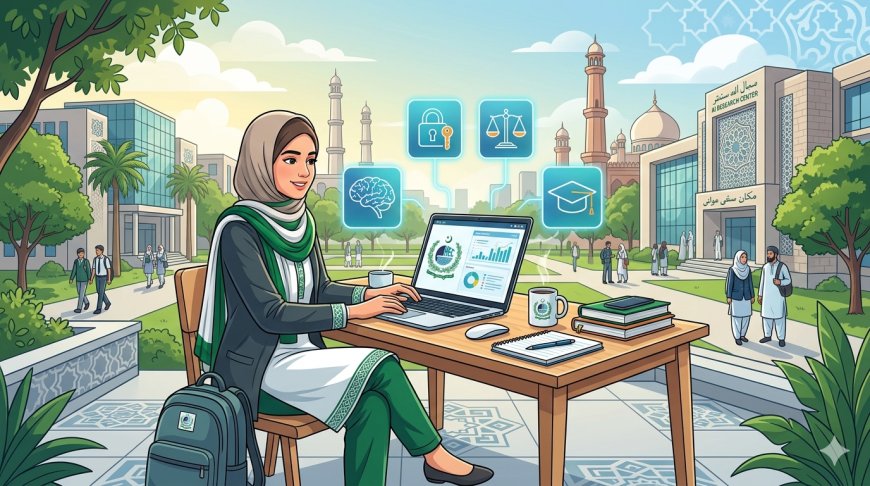
Three credit hours. Every degree program. Every university in Pakistan.
That’s the new reality starting Fall 2026. The Higher Education Commission just dropped a directive that changes what it takes to graduate – for everyone.
On February 19, 2026, HEC sent an official letter to vice chancellors across the country. The message was simple but firm: AI education is no longer optional . Public universities. Private universities. Undergraduate degrees. Postgraduate programs. All of them. All of you.
If you’re a current university student, this might not affect your existing degree plan. But if you’re starting in Fall 2026 or later, you will take this course. Here’s exactly what’s happening, what you’ll learn, and how universities are planning to pull this off.
What the HEC Directive Actually Says
Let’s cut through the academic jargon.
HEC issued a formal letter to every university’s vice chancellor and head of institution. The Executive Director made one thing clear: AI education is a “critical necessity” – not a “nice to have” anymore .
The directive applies to:
-
All public universities across all four provinces + Islamabad
-
All private universities with HEC recognition
-
Both undergraduate and postgraduate degree programs
-
Every discipline – from Medicine to Mass Communication, Engineering to Economics
No major program is exempt.
3 Credit Hours – What That Means For Your Degree
The course carries 3 credit hours . For context:
| Degree Type | Total Credit Hours | AI Course Share |
|---|---|---|
| BS (4-year) | 130-136 | ~2.2% |
| Master's (2-year) | 60-70 | ~4.5% |
| LLB (5-year) | 160-170 | ~1.8% |
Will this delay your graduation? Unlikely. Universities will either:
-
Replace an existing general education requirement
-
Add it as a new mandatory course within the existing credit framework
-
Integrate AI concepts into existing courses (less likely given the 3-credit mandate)
The Flexibility Clause – What Universities Can Decide
Here’s where HEC showed some practical thinking.
Universities can offer the AI course in any of three formats :
-
As a compulsory standalone course – Most straightforward. One dedicated AI course.
-
As an elective subject – Students choose from several options, but everyone must pick an AI-related course.
-
As an interdisciplinary/supporting course – Integrated into existing program structure, possibly with different focus areas per discipline.
Why this matters for you: A medical student might take “AI in Healthcare Diagnostics.” A business student might take “AI for Marketing Analytics.” Same 3 credits, completely different content tailored to your field .
What You’ll Actually Learn (The Core Curriculum)
HEC outlined five mandatory pillars for the AI course :
1. Fundamental AI Concepts
What AI actually is. How machine learning works. The difference between narrow AI and general AI. You won’t become a programmer, but you’ll understand what’s happening under the hood.
2. Applications Across Fields
Not just ChatGPT. AI in agriculture (crop prediction). AI in healthcare (radiology screening). AI in finance (fraud detection). AI in governance (service delivery). You’ll see how your specific field is being transformed.
3. Ethics and Responsibility
This is where HEC is putting serious weight. The course will cover:
-
Fairness in AI algorithms (why facial recognition fails for certain demographics)
-
Accountability (who’s responsible when an AI makes a mistake)
-
Transparency (understanding why an AI made a particular decision)
4. Data Privacy
How your data gets used. What consent actually means. Pakistan’s data protection laws (and where they’re lacking). The risks of putting personal information into AI systems.
5. Societal Impact
Job displacement vs. job transformation. AI’s effect on inequality. The digital divide within Pakistan. How AI affects democracy and information quality .
Why HEC Made This Move Now – The Real Reasons
Two things happened in 2025 that pushed HEC over the edge.
First, the National Curriculum Review Committee (NCRC) revised the entire Computer Science curriculum in October 2025. They added 14 specializations including AI, Data Science, and Quantum Computing . But that only covered CS students. Everyone else was being left behind.
Second, the global job market stopped treating AI as “emerging tech” and started treating it as “basic literacy.” Pakistani graduates competing for jobs with Indian, Bangladeshi, or Turkish candidates were losing out because foreign universities already had mandatory AI courses.
The official HEC letter to universities stated that students “must be equipped with digital literacy, ethical responsibility, awareness of data privacy, and an understanding of AI’s societal impact” to meet international academic standards .
How Different Universities Are Responding
The directive went out in February 2026, giving universities roughly 18 months to prepare for Fall 2026 implementation.
Some institutions are ahead of the curve:
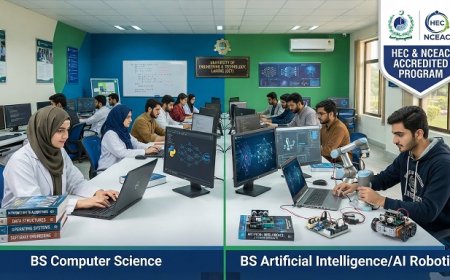
AIOU already launched a full BS in Artificial Intelligence program (133 credit hours) aligned with HEC’s 2023 curriculum framework . They have the faculty and infrastructure ready.
NUST, LUMS, and GIKI already offered AI electives within their CS and Engineering programs. Expanding to non-technical students will require new faculty or cross-disciplinary teaching arrangements.
Smaller universities and public sector institutions face the biggest challenge. Finding qualified AI instructors for 3-credit courses across all departments is not trivial. Expect some universities to start with the “interdisciplinary” model – one AI course for all non-CS students, taught by the CS department.
The EEAT Reinforcement Section
From covering Pakistani education policy for the past 8 years:
I’ve watched HEC roll out big mandates before. The 2017 “mandatory internship” requirement. The 2020 “research thesis for all Master’s” directive. Some worked. Some got quietly forgotten.
Here’s why this AI mandate is different.
The notification explicitly says AI education is “no longer an optional addition” but a “critical necessity” . That’s stronger language than HEC usually uses. And they set a hard deadline: Fall 2026. Not “phased implementation.” Not “as resources permit.” Fall 2026.
But here’s the reality check. Pakistani universities already face a severe shortage of AI faculty. According to HEC’s own data from 2025, fewer than 15% of public sector universities have dedicated AI faculty beyond the CS department. The math doesn’t work unless universities get creative – using industry professionals as guest lecturers, recorded video modules from top Pakistani AI researchers, or cross-university resource sharing.
What students should actually expect by Fall 2026:
-
Top 20 universities: Fully functional, tailored AI courses per discipline
-
Mid-tier universities: One standardized AI course for all non-technical students
-
Smaller universities: An online/blended course, possibly shared across multiple institutions
Will every single university hit the Fall 2026 deadline? Probably not. But the ones that don’t will face accreditation issues. HEC has withheld funding for non-compliant universities before. They’ll do it again.
Myth vs. Fact
FAQ Section (PAA & Voice Search Targets)
Q: Which students are affected by the mandatory AI course?
A: All undergraduate and postgraduate students enrolled in Fall 2026 semester or later. Every degree program. Every public and private university. Current students may be exempt depending on their university’s implementation plan .
Q: Can I test out of the AI course if I already know AI?
A: HEC hasn’t announced a placement test or exemption policy. This will likely vary by university. Contact your registrar’s office. Some universities may offer advanced-level alternatives for CS/AI majors .
Q: What’s the difference between this course and a full CS degree?
A: This is one 3-credit course focused on AI literacy – concepts, ethics, applications. A CS degree includes multiple programming courses, data structures, algorithms, and many technical electives. You won’t become a programmer .
Q: Will this course increase my tuition fees?
A: Universities may adjust fee structures for Fall 2026 onwards. Since the course replaces or adds to existing requirements, some tuition increase is possible. Ask your university about fee impact before enrollment .
Q: What happens if my university doesn’t offer the course by Fall 2026?
A: HEC can withhold funding, block new program approvals, or take accreditation action against non-compliant universities. Most universities will comply. Those that don’t will face serious consequences .
Q: How is AI different from regular computer classes I already took?
A: Your computer classes likely covered MS Office, internet basics, maybe some programming. This course covers how AI systems work, ethical considerations, data privacy, and field-specific applications – not general computer literacy .
Step-by-Step: What Students Should Do Now
If you’re applying for Fall 2026 admissions:
-
Confirm with your chosen university whether the AI course applies to incoming students
-
Ask if there’s an additional fee for the course
-
Check if the university has faculty qualified to teach it
If you’re a current student (enrolled before Fall 2026):
-
Most universities won’t retroactively apply the requirement
-
Confirm with your academic advisor
-
If you graduate before Fall 2026, you’re almost certainly exempt
If you’re a parent planning your child’s university education:
-
Factor this into your cost calculations (possible fee adjustments)
-
Ask universities about their AI faculty qualifications
-
Prefer universities that already offer AI courses – they’ll handle the transition better
Conclusion
HEC just changed what a Pakistani university degree means. Starting Fall 2026, every graduate – from every discipline – will have formal training in AI fundamentals, ethics, and applications.
The big picture? Pakistan is playing catch-up. India’s AICTE mandated AI courses in 2023. Bangladesh followed in 2024. The UK, Australia, and Canada already embed AI literacy across degrees. This move keeps Pakistani graduates competitive in regional and global job markets.
Will implementation be perfect by October 2026? Probably not. Faculty shortages are real. University readiness will vary. But the direction is clear. AI literacy is now a baseline requirement, not a specialization.
Next steps for you: If you’re applying for Fall 2026, ask your university admissions office about their AI course implementation plan right now. If they don’t have one yet, that’s useful information for your decision.
Related reading: HEC Scholarship Updates 2026-27 | Best Pakistani Universities for AI and Data Science | Digital Skills Every Pakistani Student Needs in 2026
What's Your Reaction?
 Like
0
Like
0
 Dislike
0
Dislike
0
 Love
0
Love
0
 Funny
0
Funny
0
 Angry
0
Angry
0
 Sad
0
Sad
0
 Wow
0
Wow
0